Urban Skate Chase
Reviews
Description
Core Gameplay Loop
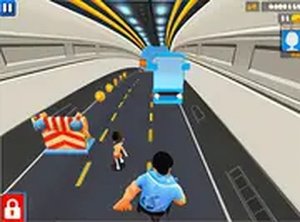
Urban Skate Chase drops players into a continuously scrolling city environment where the only goal is to keep moving forward. As the character speeds along sidewalks and alleys, obstacles like parked vehicles and stacked cargo crates appear without warning. Quick reflexes are essential to leap over low barriers or slide beneath overhead obstructions. The game rewards sustained focus by gradually increasing the pace, testing how well players can maintain their rhythm under pressure.
Controls and Responsiveness
Movement is handled entirely through keyboard inputs. The up arrow triggers a jump, the down arrow initiates a slide, and the left and right arrows shift the character sideways to avoid hazards. These controls are deliberately simple, allowing players to concentrate on timing rather than complex button combinations. The game registers inputs with minimal delay, which is critical when obstacles appear suddenly. Practicing the timing of jumps and slides helps players navigate tight spaces and chain movements together smoothly.
Visual Style and Atmosphere
The city backdrop features bright colors and varied street scenes, from graffiti-covered walls to busy intersections. The visual design emphasizes energy and motion, with buildings and pavement scrolling past at a steady clip. This lively setting gives each run a sense of place, making the environment feel alive rather than static. The art style avoids realistic detail in favor of a clean, cartoon-like look that keeps the screen readable during fast play.
Scoring and Collectibles
Coins and hidden items are scattered along the route, offering score bonuses for those who grab them. Collecting these rewards adds to the player's total without altering the core challenge. The game does not penalize players for missing items, so risk-taking is optional. This design lets newcomers focus on survival while giving experienced players an extra goal to chase. The scoring system provides a simple metric for measuring improvement over multiple attempts.
Replay Value and Difficulty Curve
Because the layout of obstacles changes each time, no two runs feel exactly the same. The difficulty ramps up naturally as the game speed increases, forcing players to react faster and plan their moves more carefully. This escalating challenge keeps the experience fresh and encourages repeated plays. The lack of a fixed endpoint means every session ends only when the player makes a mistake, which builds a strong incentive to try again and beat a previous distance or score.


Player Comments
Sign in to comment
You must be logged in before posting a review or rating.
No account? Create one
No comments yet. Be the first to comment!