Sphere Path Logic Challenge
Reviews
Description
Core Objective and Mechanics
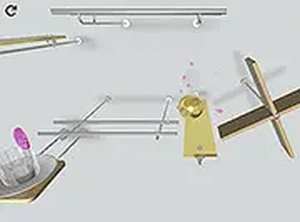
In this online puzzle experience, players must guide a small sphere to a marked goal by positioning various objects on a 3D board. The primary tools available are rigid bars and transparent panels, each with distinct physical properties. Bars can redirect or support the ball, while panels allow it to slide or bounce. The challenge lies in understanding how these materials interact with the sphere's momentum and gravity. Each level is a self-contained problem that demands a unique arrangement of objects to succeed. The game rewards patience and logical thinking over speed, making it accessible to players who enjoy methodical problem-solving.
Level Progression and Difficulty Curve
The puzzles are organized into a sequence that gradually increases in complexity. Early stages introduce basic concepts like straight paths and simple redirections. Later levels incorporate multiple objects, tighter spaces, and more intricate routes. This structure allows newcomers to build confidence with fundamental mechanics before facing advanced challenges. The difficulty ramp is smooth, ensuring that players never feel overwhelmed by a sudden jump in complexity. Each solved puzzle provides a sense of accomplishment, encouraging continued play. The variety in level design keeps the experience fresh, as no two puzzles rely on the same solution pattern.
Visual and Audio Atmosphere
The game uses realistic 3D graphics to simulate the appearance of metal, glass, and other materials. Lighting and shadows add depth to the board, making it easier to judge distances and angles. A soft background melody plays during gameplay, creating a relaxed mood. When the ball strikes an object, a xylophone-like tone sounds, providing clear audio feedback without being distracting. This combination of visuals and sound helps players focus on the puzzle at hand. The overall presentation is clean and uncluttered, with no unnecessary animations or effects that might interfere with concentration.
Controls and Interface Design
Players interact with the game using a mouse or keyboard. Objects are selected from a palette and placed on the board with a simple drag-and-drop action. The interface is minimal, showing only essential information such as the current level number and a reset button. A full-screen mode is available for those who prefer an immersive view. The controls are responsive and precise, which is important for positioning objects accurately. No complex menus or tutorials are needed; the game lets players start solving immediately. This straightforward design ensures that the focus remains on the puzzles themselves.









Player Comments
Sign in to comment
You must be logged in before posting a review or rating.
No account? Create one
No comments yet. Be the first to comment!