← Back to Games

Path Puzzle: Draw to Goal
Developer: Kingdompeak Labs
Published: 2026-09-30
Updated: 2026-09-30
Loading Game Image...
Reviews
Path Puzzle: Draw to Goal offers a straightforward premise: draw a line to guide a character past obstacles. Its strength lies in the gradual difficulty curve and the absence of time pressure, making it ideal for players who enjoy thoughtful, creative problem-solving. The game is accessible to all ages, though experienced puzzlers may find early levels easy. The visual style is minimal, keeping focus on the puzzles themselves. Overall, it is a solid choice for casual brain training.
Description
Drawing Routes to the Goal
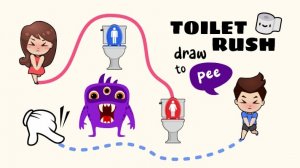
In Path Puzzle: Draw to Goal, your task is straightforward: connect a character to a designated goal by drawing a path. Using a mouse or finger, you sketch a line that the character then follows. Obstacles stand between start and finish, so the route must weave around them. The game rewards efficiency—shorter, cleaner paths are often better. There is no timer, so you can plan each stroke carefully before committing.Puzzle Design and Progression
Each level presents a unique layout with obstacles placed to challenge your spatial reasoning. Early puzzles are simple, but later ones introduce more varied obstacle arrangements that demand careful observation. The difficulty curve is gentle, making the game accessible for beginners while still offering enough complexity for experienced players. Because puzzles can be solved at your own pace, the experience stays relaxed and focused.Tips for Solving Efficiently
Before drawing, scan the entire puzzle to identify the most direct route. Look for gaps between obstacles and consider how the character will move along your line. Experiment with different paths—sometimes an unconventional approach works better than the obvious one. Patience helps; rushing often leads to tangled lines. With practice, you will start recognizing common patterns and solving puzzles faster.✅ Compatibility & Testing
• Desktop (Windows 11, macOS Ventura)
• Mobile (iPhone 14, Samsung Galaxy S23)
• Tablet (iPad Pro, Android tablet)
✅Supported browsers: Chrome, Safari, Edge, Firefox (latest versions)
❌ Not supported: Internet Explorer, older browser versions
Faq
Is Path Puzzle: Draw to Goal suitable for children?
Yes, the game is designed to be family-friendly. Its simple controls and lack of time pressure make it accessible for younger players, while the increasing puzzle complexity keeps older players engaged. The clean visual style avoids distractions.
How do I control the drawing in Path Puzzle: Draw to Goal?
You draw lines using either a mouse or a touchscreen. Simply click or tap to start drawing from the character and drag to create a path to the goal. The game interprets your line and the character follows it automatically.
Are there any time limits in Path Puzzle: Draw to Goal?
No, the game has no time pressure. You can take as long as you need to plan and draw your route. This makes it a relaxing puzzle experience where you can think through each solution carefully without stress.
Does Path Puzzle: Draw to Goal have multiple difficulty levels?
The game increases difficulty gradually as you progress. Early puzzles are straightforward, while later ones introduce more complex obstacle layouts. There is no separate difficulty setting; the challenge scales naturally with each new puzzle.
Can I undo a drawing mistake in Path Puzzle: Draw to Goal?
The game allows you to experiment with different routes. If a path doesn't work, you can typically redraw it. The exact undo mechanics are not specified, but the game encourages trying alternative solutions without penalty.
What skills does Path Puzzle: Draw to Goal help develop?
The game promotes logical thinking, spatial reasoning, and planning. By requiring you to find efficient routes around obstacles, it exercises cognitive skills in a fun, low-stakes environment. It is often described as brain training.
Player Comments
Sign in to comment
You must be logged in before posting a review or rating.
No comments yet. Be the first to comment!




Editorial Notes