Sliding Logic Puzzle
Reviews
Description
Core Sliding Mechanic
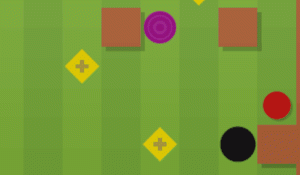
In Sliding Logic Puzzle, the player's object moves in straight lines across a grid until it collides with a wall. That collision changes the object's direction, so walls function as both barriers and steering tools. The objective is to guide the object into a designated hole. Simple click or tap controls start the slide, but the path is never direct. Players must think ahead, using walls to bounce and redirect the object toward the goal. The mechanic is easy to grasp yet demands careful planning.
Portals and Obstacles
Portals appear on the grid and teleport the object to a different spot. This adds a layer of complexity: a route that looks straightforward can be disrupted by a portal, forcing players to recalculate. Obstacles and grid edges also influence movement, and using them to your advantage is part of the strategy. Each level has a unique layout, so the arrangement of walls and portals changes how the object travels. Players must adapt their approach rather than rely on a single solution.
Difficulty and Progression
The game is designed for both children and adults. Early levels introduce the basic sliding and bouncing, while later layouts increase the challenge by combining portals and tighter spaces. There are many levels, and difficulty rises gradually. The colorful visuals and clear design keep the experience accessible, but the puzzles require logical reasoning and patience. Getting stuck is common, and trying a different direction often reveals the solution.
Who It Suits
Sliding Logic Puzzle fits players who enjoy quiet, thoughtful challenges rather than timed action. It is family-friendly and suitable for all ages. The controls are minimal, so the focus stays on planning and spatial reasoning. If you like puzzles that reward observation and small adjustments, this game offers a steady stream of unique layouts to solve.
Compatibility
Faq
Player Comments
Sign in to comment
You must be logged in before posting a review or rating.
No comments yet. Be the first to comment!









Editorial Notes