Puzzle Escape 2: Dungeon Challenge
Reviews
Description
Objective and Core Loop
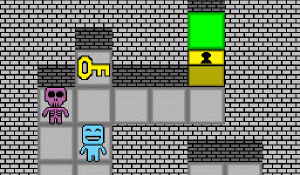
Puzzle Escape 2: Dungeon Challenge asks players to complete two connected tasks in every level: locate a hidden key and then reach the exit. A single character is controlled with keyboard keys. Skeleton enemies patrol the dungeon along fixed routes, so the key and exit are never simply a straight walk away. Touching a skeleton restarts the level immediately, which makes each movement a small decision rather than a reflex test.
How Skeleton Patrols Shape Decisions
The skeletons are predictable, not random. They follow set patterns, which means the challenge comes from reading those patterns before moving. Rushing usually ends in a restart; watching a full patrol cycle first often reveals a safe window. Because the key and exit are separate goals, players must plan a route that accounts for both, not just the nearest gap in enemy movement. This is the central logic layer: timing plus path selection.
Level Structure and Difficulty Curve
Each level introduces a new layout, and complexity increases gradually as those layouts are introduced. Early rooms tend to offer wider safe zones, while later ones demand tighter timing and longer routes. The game does not rely on reflexes or violence to raise difficulty; it adds more moving parts and narrower windows for movement. Players who prefer thinking through a problem before acting will find the pacing natural.
Visual Style and Accessibility
The dungeon uses bright, colorful visuals and contains no graphic content. That presentation keeps the focus on mental skill rather than tension or shock. Controls are simple and easy to learn, so beginners can start quickly, but the later layouts still require patience and careful observation. The overall tone is a non-violent adventure built around logic and planning.
Compatibility
Faq
Player Comments
Sign in to comment
You must be logged in before posting a review or rating.
No comments yet. Be the first to comment!









Editorial Notes