WIZ Magic Platforming Puzzle
Reviews
Description
Core Platforming & Sliding Mechanics
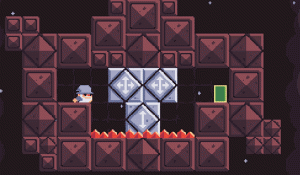
WIZ Magic Platforming Puzzle puts you in control of a wizard who must reach a flag at the end of each stage. The path is made of floating platforms suspended over dangerous terrain. Some platforms move in set patterns, and you need to time your jumps to land safely. The game uses a click or tap input to make the wizard jump. That single action is the core of every level: you watch a platform's movement, predict where it will be, and jump at the right moment.
Hazards and Level Progression
Each level arranges moving platforms, sharp spikes, and pools of fiery lava in a unique layout. Early stages introduce one hazard at a time, giving you room to learn the timing. As you advance, spikes appear more often and platforms move faster, so the same jump that worked before requires quicker reactions. There are no timers or scores, which means you can pause, study a pattern, and try again without pressure. The difficulty comes from precision, not from a clock.
Controls and Accessibility
The game supports mouse and touchscreen input. Clicking or tapping makes the wizard jump, and that is the only control you need. This makes WIZ easy to pick up for beginners and younger players. Because there are no complex button combinations, the challenge stays focused on observation and timing. The magical theme keeps the tone light, and the absence of violence or inappropriate content makes it suitable for all ages.
Approach to Challenge
Success in WIZ depends on patience. Watch a platform through a full cycle before you jump. If you miss, the game does not penalize you with a lost score or a timer—you simply try again. Practicing earlier levels helps build a feel for how platforms move. The relaxed structure means you can take breaks when a section feels frustrating and return with fresh eyes. The goal is steady improvement, not speed.
Compatibility
Faq
Player Comments
Sign in to comment
You must be logged in before posting a review or rating.
No comments yet. Be the first to comment!






Editorial Notes